
The Essence of Second Language Fluency Is the Automation of Language Processing
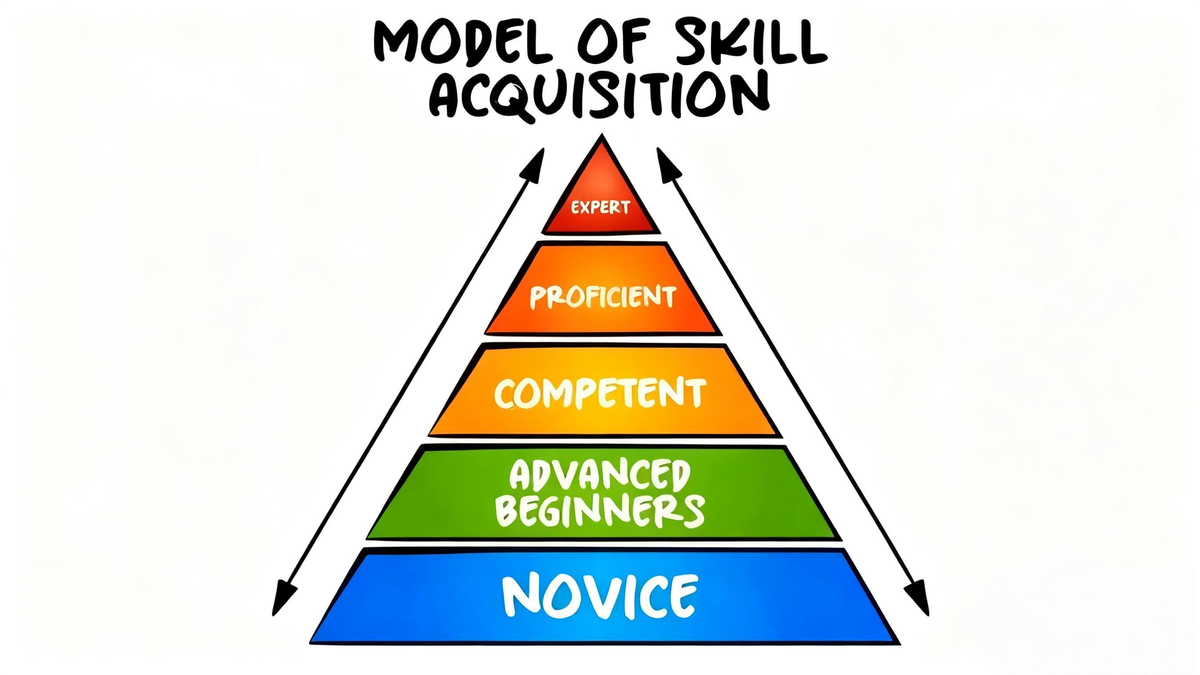
The essence of second language fluency lies in transforming the language processing from a conscious, effortful controlled operation into an unconscious, efficient automated one. This core idea has been extensively explored in the field of Second Language Acquisition. The Input Processing Model proposed by Bill VanPatten and the Skill Acquisition Theory by Robert DeKeyser, from the two dimensions of "input comprehension" and "skill development" respectively, clearly outline the path of how language processing becomes automated.
二语流利度的本质,在于将语言处理过程从有意识、费力的控制性加工,转变为无意识、高效的自动化加工。这一核心思想在二语习得研究领域得到了深入探讨。比尔·范帕滕提出的输入加工模型和罗伯特·德凯泽提出的技能习得理论,分别从“输入理解”和“技能发展”两个维度,清晰地勾勒出语言处理如何走向自动化的路径。
I. Bill VanPatten's Input Processing Model (1990s): Automating the Guidance of Attention
Bill VanPatten's model focuses on how learners allocate their limited attentional resources when comprehending input. The core of this model is a fundamental reality: human information processing capacity is limited, especially in the early stages of learning.
比尔·范帕滕的模型专注于探讨学习者在理解输入时,如何分配其有限的注意力资源。该模型的核心在于一个基本现实:人类的信息处理能力是有限的,尤其是在学习初期。
- Core Principles and "Limited Processing Capacity": VanPatten points out that when learners process language input, they follow a "Meaning First" principle. For instance, upon hearing or reading "Yesterday, I walked to the park," due to limited processing capacity, learners instinctively prioritize grasping content words that carry core meaning, like "yesterday," "I," "walk," "park," to quickly construct the basic meaning of "I went to the park yesterday." The grammatical marker for past tense, "-ed," is likely to be ignored because processing resources are already depleted. This demonstrates the "Limited Processing Capacity" principle: when comprehending the meaning itself is already cognitively demanding, learners have no spare attention to focus on linguistic forms.
范帕滕指出,学习者在处理语言输入时,会遵循一个“意义优先”的原则。当听到或读到“Yesterday, I walked to the park.”这样的句子时,由于处理能力有限,学习者会本能地优先抓取那些承载核心意义的词汇项,如“yesterday”(时间)、“I”(主语)、“walk”(动作)、“park”(地点),从而快速构建出“我昨天走去公园”的基本意义。而作为语法形式的过去时态标记“-ed”,则很可能因为处理资源已被耗尽而被忽略。这就是“有限注意力容量”原则的体现:当理解内容本身已经耗费了大量认知资源时,学习者便没有多余的注意力来关注语言的形式特征。
- Pedagogical Implication: Processing Instruction: This theory has a direct impact on teaching practice, giving rise to the "Processing Instruction" teaching method. This approach does not directly explain grammatical rules but involves designing specific activities and input materials to guide learners to redirect their attention to the grammatical forms they would normally overlook. For example, by providing ample input containing specific grammatical structures (like the past tense of verbs) and designing tasks that require learners to understand that form to complete (e.g., judging when an event occurred), it "forces" their processing system to begin noticing and ultimately automatically process these forms. The goal is to transform the recognition and understanding of form from non-occurrence or requiring deliberate effort into an automated process that does not consume excessive attention.
这一理论对教学实践产生了直接影响,催生了“加工指令”教学法。该教学法并非直接讲解语法规则,而是设计特定的活动和输入材料,引导学习者将注意力重新分配到他们通常会忽略的语法形式上去。例如,通过提供大量含有特定语法结构(如动词过去式)的输入,并设计任务要求学习者必须理解该形式才能完成(如判断事件发生的时间),从而“强迫”其处理系统开始关注并最终自动化处理这些形式。其目标是,让对形式的识别和理解,从不发生或需要刻意努力,转变为一种无需消耗过多注意力的自动化过程。
II. Robert DeKeyser's Skill Acquisition Theory(1990s-): Automating Knowledge Transformation
If VanPatten's model explains the starting point of automation at the input comprehension end, then Robert DeKeyser's Skill Acquisition Theory systematically describes the complete journey from knowledge acquisition to output automation. He clearly divides second language acquisition into three sequential stages:
如果说范帕滕的模型解释了输入理解端的自动化起点,那么罗伯特·德凯泽的技能习得理论则系统地描述了从知识获取到输出自动化的完整历程。他将二语习得明确划分为三个循序渐进的阶段:
- Declarative Stage: This is the starting point of learning. Learners acquire knowledge about "what" the language rules are through explicit instruction or self-discovery. For example, learning and memorizing that "the past tense of regular English verbs requires adding -ed to the end." The knowledge at this stage is explicit, declarative, and its application is slow and requires conscious control, much like a novice driver needing to recite every operational step.
陈述性知识阶段:这是学习的起点。学习者通过明确的课堂教学或自我发现,获得关于语言规则的“是什么”的知识。例如,学习并记忆“英语规则动词的过去式需要在词尾加-ed”。此时的知识是显性的、陈述性的,应用起来缓慢且需要意识的控制,如同新手司机需要默念每一个操作步骤。
- Proceduralization Stage: This is the key link to achieving automation. Through extensive, repeated, and targeted practice, learners begin to transform declarative knowledge into procedural knowledge. In this stage, rules that originally required step-by-step recall and application ("the verb needs past tense... add -ed") are gradually internalized into a "how-to" procedure. The cognitive load gradually lessens, the speed of application increases, and accuracy improves. This process is "proceduralization," which shifts the application of knowledge from relying on slow declarative memory to relying on faster operational procedures.
程序化阶段:这是实现自动化的关键环节。通过大量、反复且有针对性的练习,学习者开始将陈述性知识转化为程序性知识。在这个阶段,原本需要一步步回忆和应用的规则(“动词要变过去式…加-ed”),逐渐被内化为一种“如何做”的程序。认知负担逐渐减轻,应用速度加快,准确性提高。这个过程就是“程序化”,它使得知识的应用从依赖缓慢的陈述性记忆,转向依赖更快速的操作流程。
- Automaticity Stage: This is the ultimate manifestation of fluency. Through continuous practice and use, procedural knowledge is intensely reinforced, finally reaching an automatic level where it can be used accurately and fluently without conscious control. At this point, when using the past tense, the language user no longer needs to think about "what is the rule," or may not even be aware of it, just as a skilled driver can talk while driving. Language production becomes fast, effortless, and accurate; this is true fluency.
自动化阶段:这是流利度的最终体现。通过持续不断的练习和实践,程序性知识得到极致强化,最终达到无需意识控制即可准确、流利使用的自动化水平。此时,语言使用者在使用过去时态时,已不再需要思考“规则是什么”,甚至感觉不到它的存在,就像熟练司机可以一边开车一边交谈一样。语言的产出变得迅速、轻松而准确,这才是真正意义上的流利。
Different Paths to the Same Goal: Automation as the Common Core of Fluency
VanPatten's model and DeKeyser's theory approach from different angles, but they both reveal the same essence of second language fluency: automation.
范帕滕的模型和德凯泽的理论视角不同,但共同揭示了二语流利度的本质——自动化。
VanPatten starts from the "input end," emphasizing that to automate output, one must first automate the comprehension of input (especially the perception of form). If learners consistently fail to automatically capture key grammatical forms in rapid speech streams, they will inevitably lack the foundational material to build automated procedures for output.
范帕滕从“输入端”入手,强调若要使输出自动化,首先必须让对输入的理解(特别是对形式的感知)实现自动化。如果学习者始终无法在快速的语流中自动捕捉到关键语法形式,那么他们在输出时也必然缺乏建立自动化程序的基础材料。
DeKeyser, from a macro perspective of "skill development," outlines the entire process of how explicit knowledge, through practice, eventually precipitates into an implicit automated ability. He clarifies that automation is not an overnight achievement but a continuous practice process that requires undergoing procedural transformation.
德凯泽则从“技能发展”的宏观路径着眼,描绘了显性知识如何通过练习最终沉淀为隐性自动化能力的全过程。他明确了自动化并非一蹴而就,而是一个需要经历程序化转换的、持续的练习过程。
In summary, improving second language fluency is essentially a journey of continuously automating various aspects of language processing. It requires both instructors and learners to value the quality of input processing, fostering the automated perception of forms through methods like "Processing Instruction." Simultaneously, it is crucial to recognize the objective laws of skill acquisition and promote knowledge transformation through sufficient, effective practice—from the declarative stage, through the proceduralization stage, and finally to the彼岸 of automatic application. Only by achieving efficient automation in both input comprehension and output application can learners truly break free from the constraints of language rules and reach the ideal state of expressing themselves freely and fluently.
二语流利度的提升,本质上就是一个将语言处理各环节不断自动化的旅程。它要求教学者和学习者 alike 重视输入加工的质量,通过诸如“加工指令”等方法,培养对形式的自动化感知;同时,也必须认识到技能习得的客观规律,通过足量、有效的练习,推动知识从陈述性形态,经由程序化阶段,最终迈向自动化应用的彼岸。唯有在输入理解与输出应用两方面都实现高效自动化,学习者才能真正摆脱语言规则的束缚,达到随心所欲、流畅表达的理想境界。